

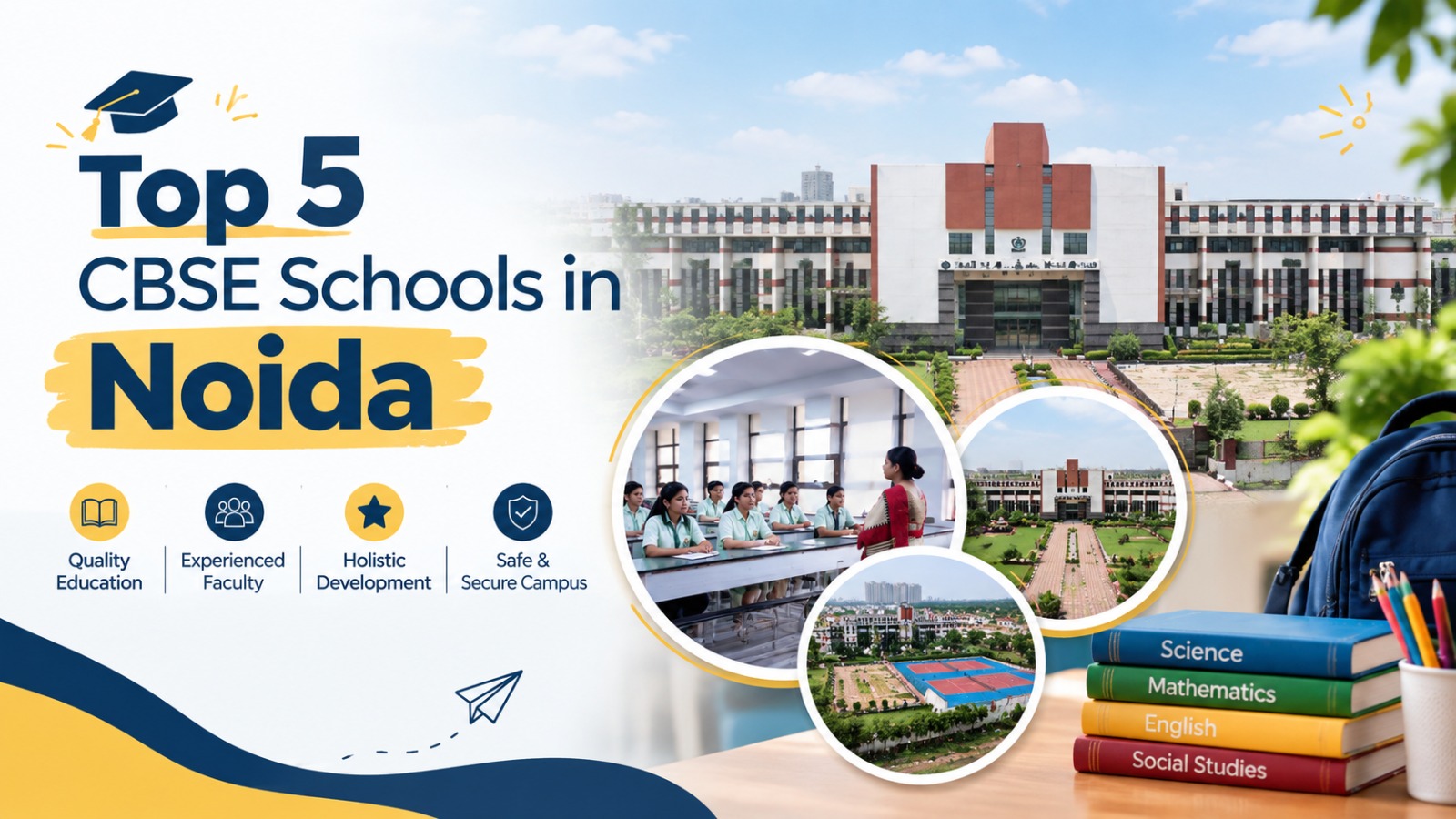
Choosing a school is one of the most important decisions parents make for their children. With the growing number of educational institutions in the region, parents often search for the top 5 CBSE schools in Noida when looking for an environment that can support both academic learning and overall development.
However, selecting a school should involve more than comparing names, facilities, or academic results. Education today is changing rapidly. Children need knowledge, but they also need creativity, communication skills, critical thinking, emotional confidence, digital awareness, and the ability to adapt to a changing world.
This is where modern education becomes important. A modern school should prepare students not only for examinations but also for higher education, careers, relationships, responsibilities, and everyday challenges.
Modern education goes beyond traditional classroom teaching. While textbooks and academic subjects remain important, today's learning environment also focuses on how students understand, apply, question, and use knowledge.
A modern approach to education can include:
When parents explore the top 5 CBSE schools in Noida, these factors can help them understand whether a school is truly preparing children for the future.
Academic knowledge continues to be an essential part of education. A strong understanding of mathematics, science, languages, social sciences, and other subjects gives students the foundation they need for higher education.
Modern education does not replace academics. Instead, it makes academic learning more meaningful by encouraging students to understand concepts rather than simply memorising information.
Students who understand why something works are often better prepared to apply their knowledge in unfamiliar situations.
The modern world provides students with an enormous amount of information. The ability to identify reliable information, analyse situations, ask questions, and make informed decisions is therefore increasingly important.
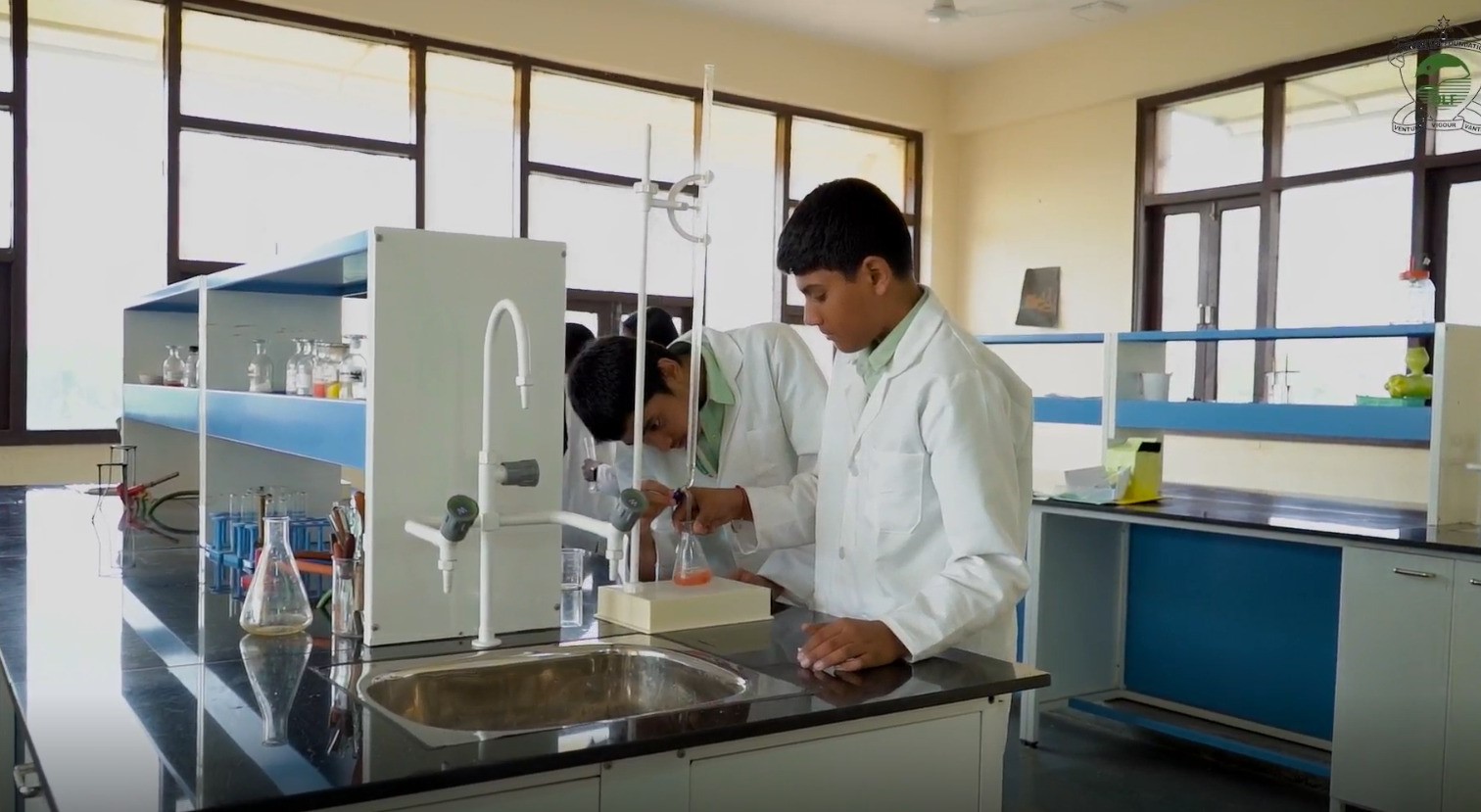
Schools can encourage critical thinking through discussions, projects, problem-solving activities, research assignments, experiments, and real-world examples.
Instead of always asking students to find the "correct answer," modern education can also encourage them to explain their reasoning and consider different perspectives.
Creativity is not limited to art or music. It is also useful in science, technology, business, communication, design, and problem-solving.
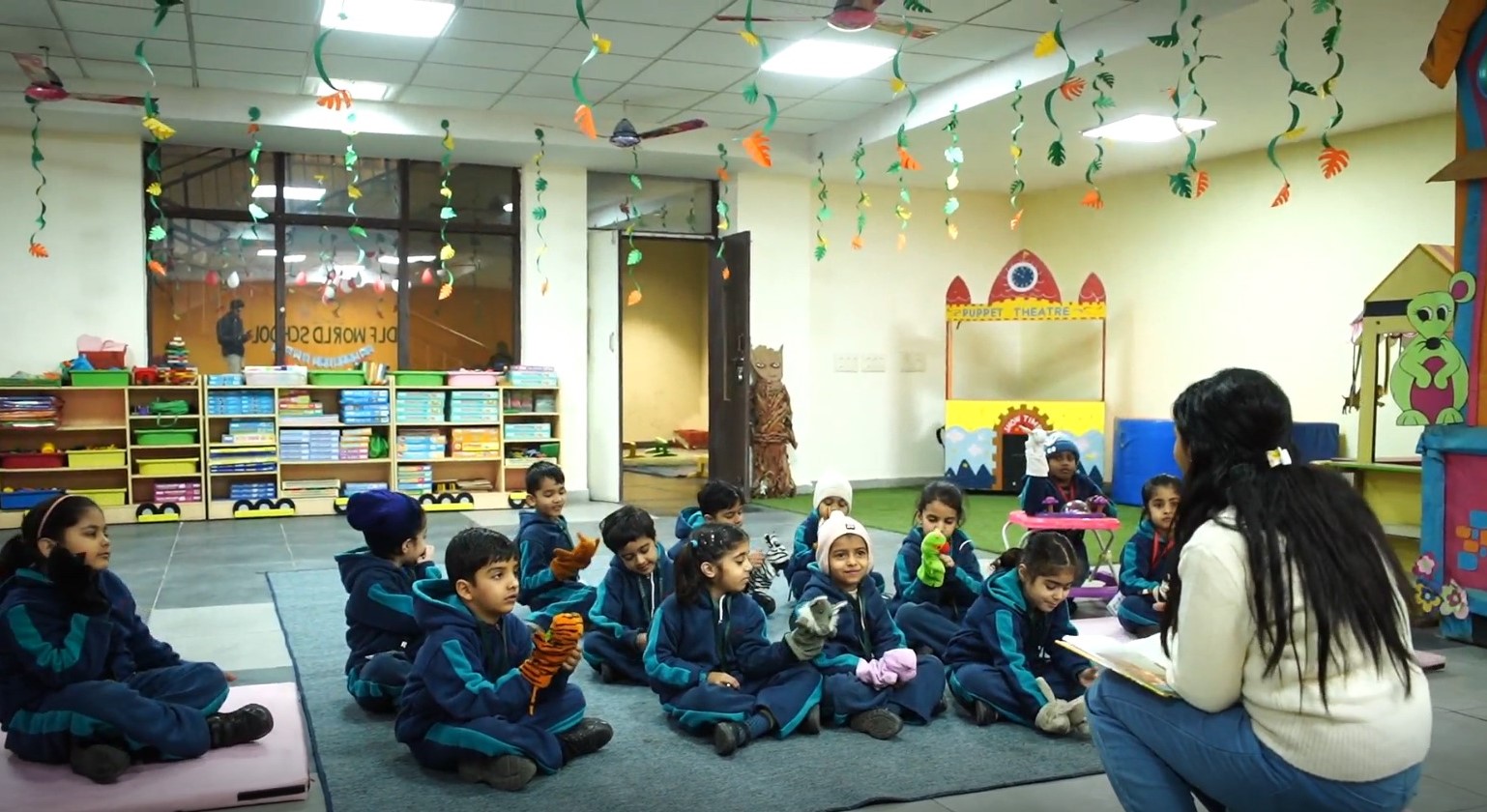
Modern schools can give children opportunities to express ideas through art, writing, projects, experiments, presentations, technology, and other creative activities.
Such experiences help students become comfortable with trying new ideas and learning from mistakes.
Education does not happen only inside a classroom. A child's development is influenced by sports, cultural activities, clubs, competitions, field experiences, social interactions, and practical activities.
When evaluating schools, parents can therefore look beyond academic performance.
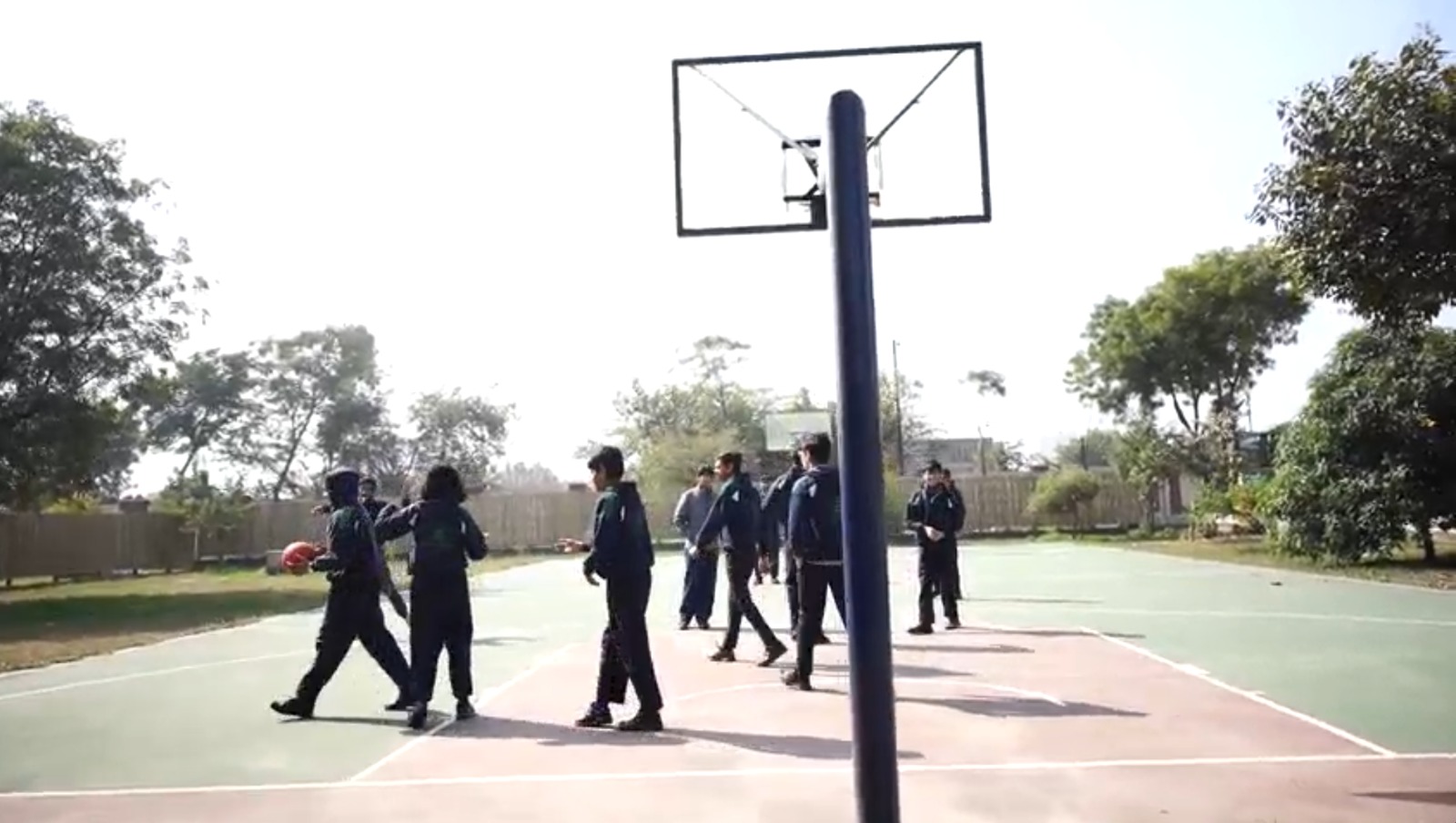
Physical activity plays an important role in a student's overall development. Sports can encourage discipline, teamwork, perseverance, coordination, and healthy habits.
A balanced school environment should give students opportunities to participate in physical activities according to their interests and abilities.
Students will eventually work with people from different backgrounds, professions, and perspectives. Communication and collaboration are therefore valuable skills.
Group projects, presentations, classroom discussions, debates, cultural activities, and team-based tasks can help students become more confident in expressing their ideas and listening to others.
Technology has become an important part of everyday life, making digital literacy an increasingly relevant educational skill.
Modern education can use technology to make learning more interactive through digital resources, educational applications, multimedia content, simulations, research tools, and collaborative platforms.
However, technology should support learning rather than replace meaningful interaction between teachers and students.
Students should also learn responsible digital behaviour, including evaluating online information, protecting personal information, understanding digital communication, and using technology appropriately.
Academic performance is only one part of a student's school experience. Children also need an environment where they feel supported, respected, and comfortable asking for help.
Modern education recognises the importance of emotional and social development. Encouraging students to understand their emotions, develop healthy relationships, manage challenges, and build confidence can contribute to a healthier learning experience.
A supportive teacher-student relationship can make a significant difference in how children participate in classroom activities and approach challenges.
Education has a larger purpose than preparing students for examinations or careers. Schools also contribute to developing responsible members of society.
Values such as honesty, empathy, respect, responsibility, cooperation, and kindness can be incorporated into everyday school life.
Students can learn about responsibility through classroom duties, community activities, environmental initiatives, teamwork, and opportunities to take leadership roles.
This helps connect education with real-life responsibilities.
Environmental challenges have become an important part of the modern world. Students should understand concepts such as sustainability, conservation, waste management, biodiversity, and responsible consumption.
Schools can introduce environmental learning through gardening, awareness campaigns, projects, recycling initiatives, nature activities, and classroom discussions.
Such experiences help students understand that their everyday choices can have an impact beyond the classroom.
One of the biggest strengths of modern education is its focus on future readiness.
The careers students pursue tomorrow may look very different from many of the careers available today. Therefore, schools need to develop transferable skills that students can use throughout their lives.
These can include:
These skills can complement academic knowledge and help students adapt to changing educational and professional environments.
The phrase top 5 CBSE schools in Noida may attract parents looking for reputed educational options, but a school should ultimately be evaluated according to the individual needs of the child.
Parents can consider factors such as:
Visiting the school, understanding its educational philosophy, speaking with teachers, and observing the learning environment can provide more useful insights than relying only on rankings or online lists.
DLF World School in Greater Noida reflects the broader idea that education should support multiple dimensions of a child's development. Along with academics, a modern school environment can provide opportunities for students to participate in activities that develop communication, creativity, physical fitness, confidence, values, and practical skills.
For parents exploring educational options around Noida and Greater Noida, understanding this broader approach can help them look beyond examination results and consider what kind of learning environment will support their child's long-term growth.
Searching for the top 5 CBSE schools in Noida can be a useful starting point for parents, but choosing the right school requires looking deeper than rankings.
Modern education is about creating a balanced learning experience where students gain academic knowledge while also developing creativity, critical thinking, communication, emotional confidence, physical fitness, digital awareness, values, and social responsibility.
A school that combines these elements can help children become more independent learners and responsible individuals. Ultimately, the right educational environment is one that gives students the knowledge, skills, confidence, and values they need not only to succeed academically but also to participate meaningfully in the world around them.