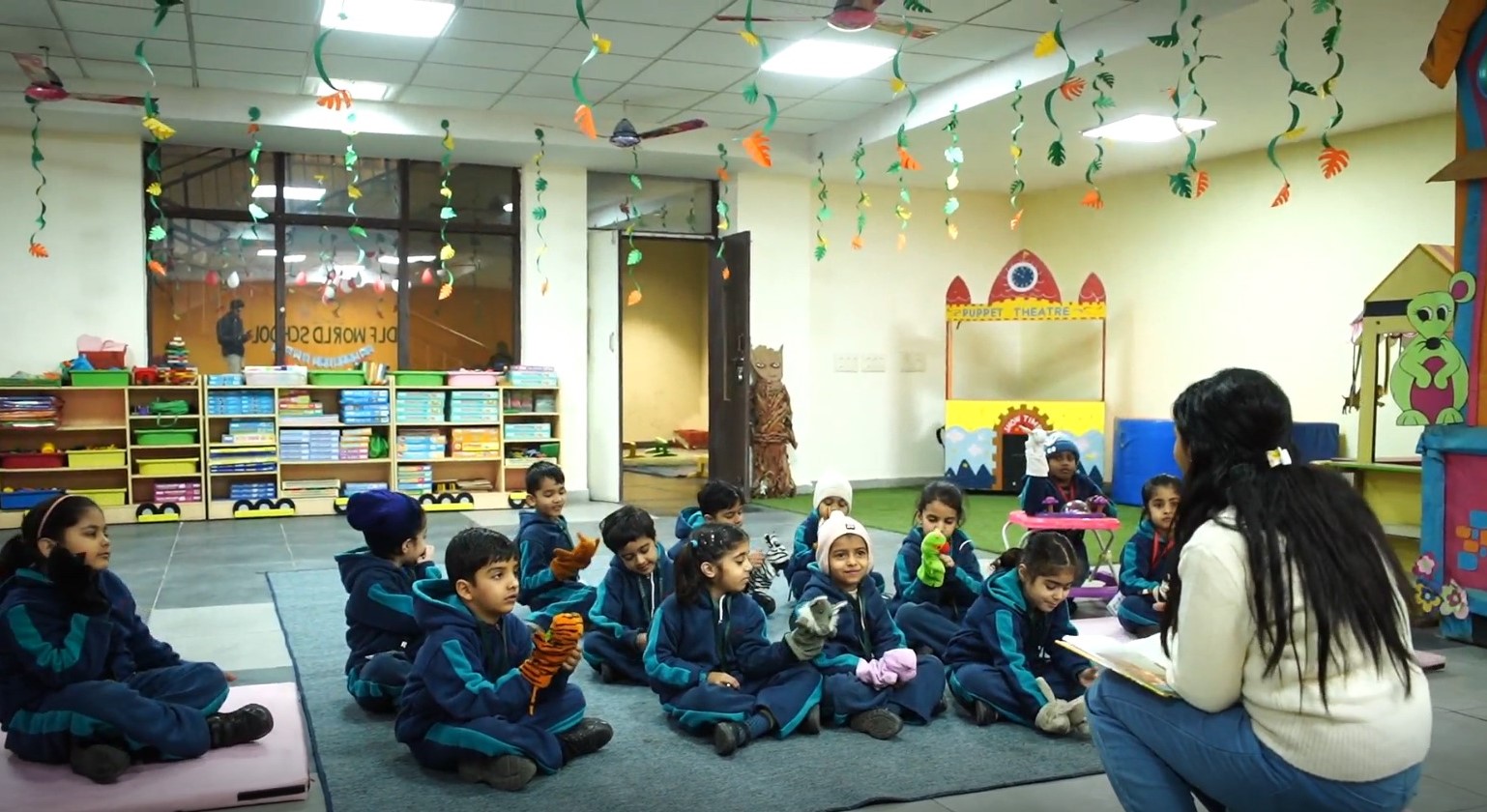

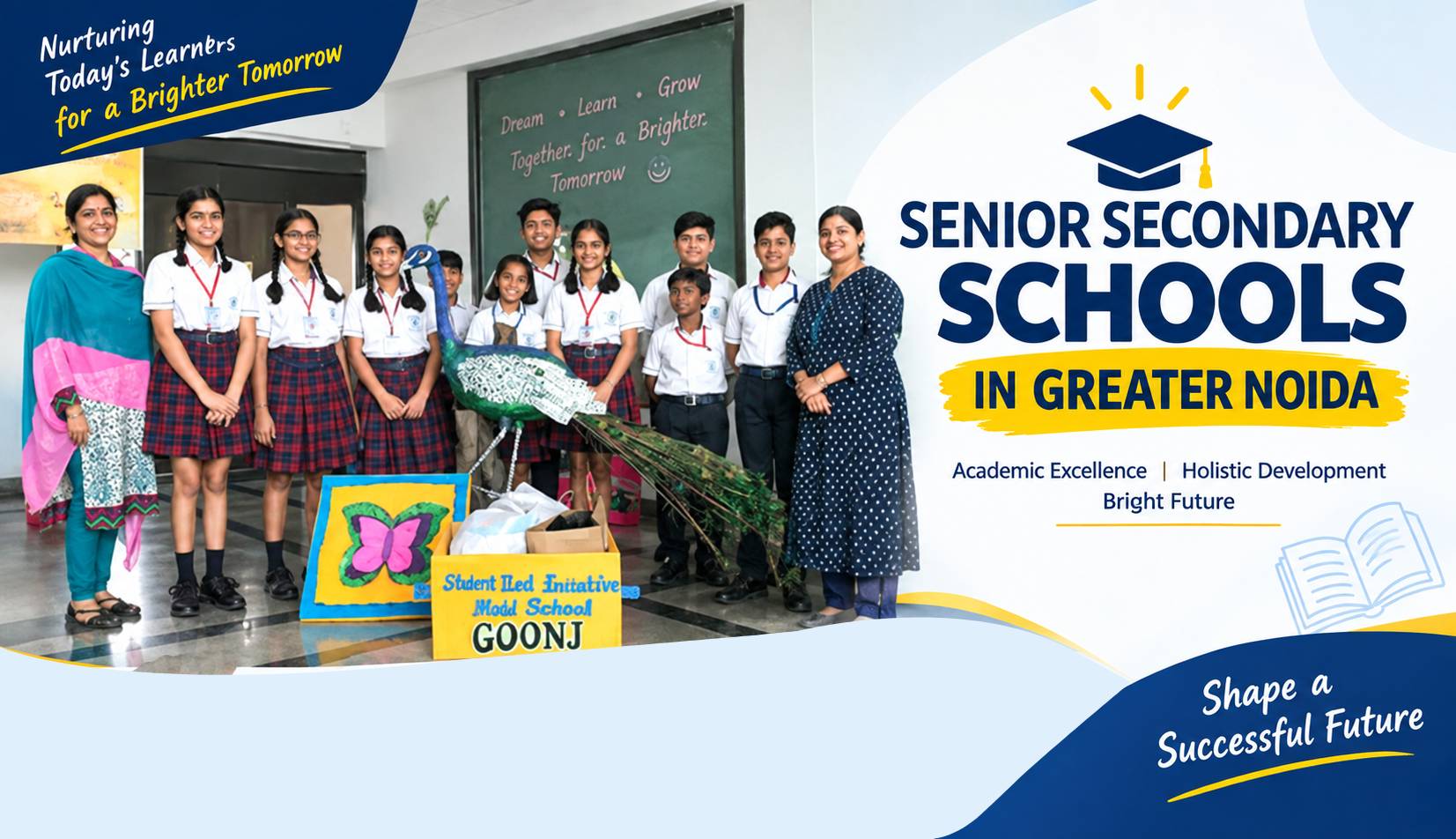
Senior secondary education is one of the most important stages in a student’s academic journey. Classes 11 and 12 are not simply the final years of school; they are a period when students begin making important decisions about higher education, career choices, personal development, and their future goals. For parents exploring senior secondary schools in Greater Noida, understanding what makes this stage important can help them choose an environment that supports their child’s long-term growth.
At this stage, students require more than classroom instruction. They need appropriate academic guidance, career awareness, opportunities to develop practical skills, and an environment that encourages independent thinking and responsible decision-making.
The senior secondary years act as a bridge between school education and higher education. Students move from learning a broad range of subjects to developing deeper knowledge in areas that may influence their future studies and careers.
During these years, students begin to understand their strengths, interests, and learning preferences. A well-structured senior secondary programme can help them become more confident about their future choices while providing the academic foundation required for competitive examinations and higher education.
For this reason, parents should look beyond examination results when evaluating senior secondary schools in Greater Noida. The quality of guidance, teaching methodology, facilities, activities, and student support can all influence a child's development during these crucial years.
One of the primary purposes of senior secondary education is to develop deeper subject knowledge. Students generally choose academic streams according to their interests and future aspirations, making the quality of teaching particularly important.
Effective senior secondary education focuses on:
Rather than relying solely on memorisation, students benefit from understanding how concepts work and where they can be applied. This approach prepares them for university-level education, entrance examinations, and professional courses.
Career decisions can feel overwhelming for students in Classes 11 and 12. They may have several interests but limited knowledge about the educational pathways and careers associated with them.
A supportive school can introduce students to different career possibilities and help them understand the relationship between subjects, higher education programmes, and professional opportunities.
Career guidance can include:
Such support allows students to make decisions based on their abilities and interests rather than simply following trends or peer pressure.
Senior secondary education should encourage students to think independently. At this stage, learners need to move beyond simply finding the correct answer and begin understanding how to analyse a problem, evaluate information, and develop logical solutions.
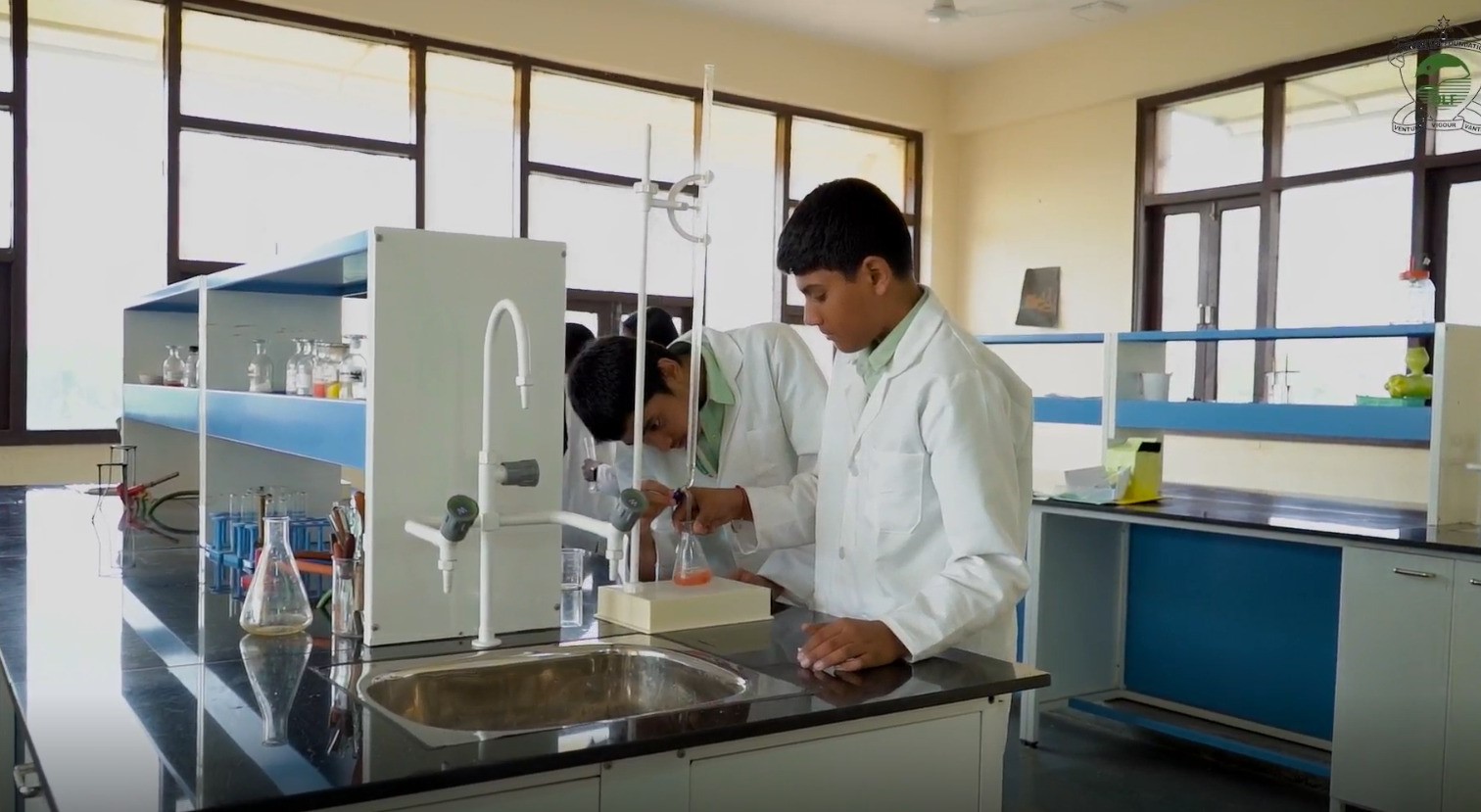
Project work, experiments, presentations, discussions, research assignments, and practical activities can help students develop these capabilities.
These skills are valuable not only for examinations but also for university education and professional life, where students are expected to approach unfamiliar problems with confidence.
The transition from school to college can be significant. Senior secondary education helps students develop the academic discipline and independence required for higher studies.
Students learn to:
A school that gradually develops these habits can make the transition to higher education smoother and less stressful.
Learning becomes more meaningful when students can connect classroom concepts with real-life situations. Practical experiences can improve understanding and encourage curiosity.
Experiential learning also encourages students to ask questions and explore subjects beyond their textbooks.
Academic knowledge is only one part of future success. Students entering college and eventually the workplace need strong communication, collaboration, and interpersonal skills.
Senior secondary schools can provide opportunities for students to participate in:
These experiences help students become more comfortable expressing their ideas, working with others, and taking responsibility.
Classes 11 and 12 can bring increased academic expectations, examinations, career decisions, and concerns about the future. Students therefore need an environment where their emotional well-being is taken seriously.
A supportive school culture can encourage students to discuss challenges, seek guidance, manage pressure, and maintain a healthy balance between academics and other activities.
Teachers, counsellors, parents, and school leadership all have an important role in creating this supportive environment.
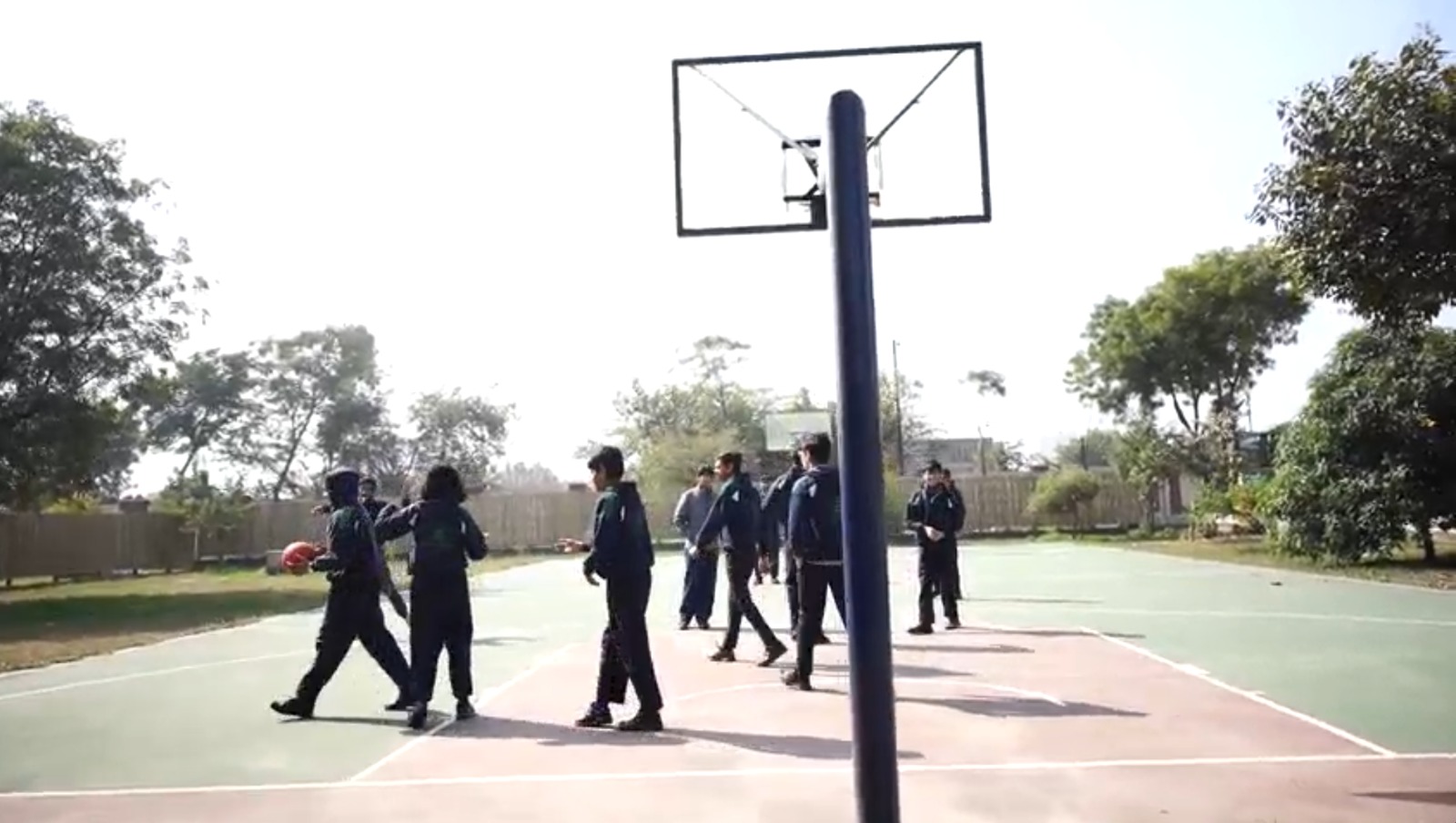
Senior secondary students often become heavily focused on academics, but completely ignoring physical and creative activities can affect their overall development.
Sports can encourage:
Similarly, music, art, theatre, literature, and other creative activities can provide opportunities for self-expression and help students discover interests outside academics.
A balanced education gives students opportunities to continue these activities while managing their academic responsibilities.
Technology has changed the way students learn and access information. Senior secondary education can use digital resources to supplement traditional classroom teaching.
Interactive presentations, digital learning platforms, educational simulations, online resources, and technology-enabled classrooms can make difficult concepts easier to understand.
However, technology works most effectively when it supports thoughtful teaching rather than replacing meaningful interaction between students and teachers.
The senior secondary stage is also a period of growing maturity. Students gradually take greater responsibility for their decisions, behaviour, studies, and future plans.
These qualities can influence students long after they leave school.
Parents comparing senior secondary schools in Greater Noida should consider the complete educational environment rather than focusing on a single factor.
Important areas to evaluate include:
Visiting a school and speaking with teachers can also help parents understand whether its educational philosophy matches their child's needs.
For families considering senior secondary schools in Greater Noida, DLF World School represents an approach to education that extends beyond academics. The senior secondary years require students to develop knowledge, confidence, independence, and clarity about their future.
A student-focused learning environment can help learners strengthen their academic foundation while also developing communication skills, creativity, leadership qualities, and responsible decision-making.
The objective of senior secondary education should ultimately be to prepare students for the next stage of life—not simply the next examination.
Senior secondary education can play a defining role in a student's future. Classes 11 and 12 provide an opportunity to deepen academic knowledge, explore career possibilities, develop practical and life skills, and become more independent learners.
When evaluating senior secondary schools in Greater Noida, parents should therefore consider the complete educational experience. A school that combines academics with career guidance, practical learning, sports, creativity, emotional support, technology, and character development can help students approach higher education and future careers with greater confidence.
The right senior secondary environment does more than prepare students for examinations. It helps them understand their potential, make informed choices, and develop the skills and mindset needed for the journey ahead.